
- NLP Trainings
- 08 Aug, 2026

Description
Why do professionals repeat behaviours they know they need to change? Discover how Mind Science (NLP), NLP Training and Strategic Coaching support thinking patterns, behavioural change and professional growth.
Why Changing Your Thinking Is Harder Than Knowing What to Change
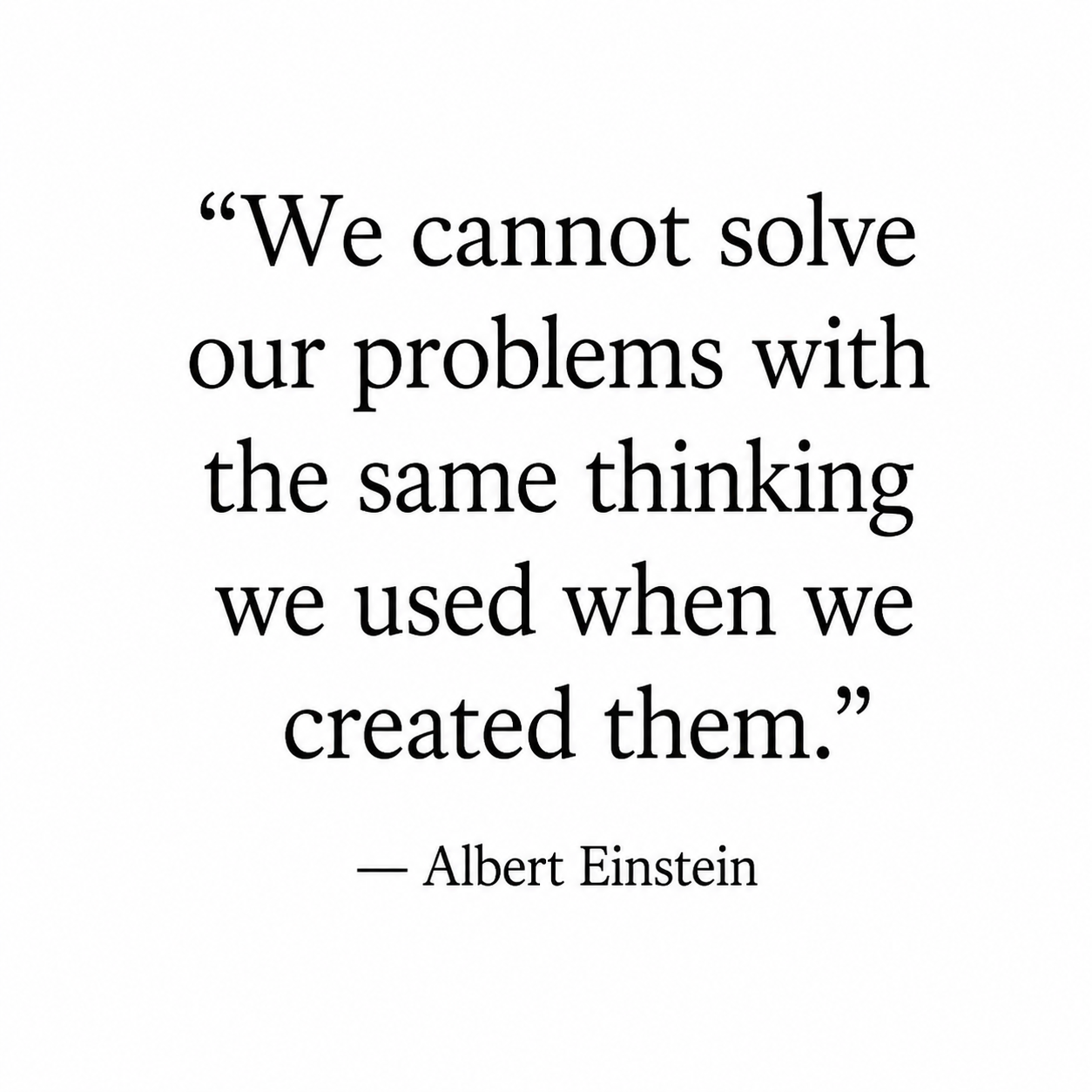
“We cannot solve our problems with the same thinking we used when we created them.”
— Albert Einstein
Most professionals I meet already know at least one thing they need to change.
"I need to speak up more in meetings."
"I should delegate instead of doing everything myself."
"I shouldn't react so quickly when someone challenges me."
"I need to stop overthinking before important conversations."
"I should allow my team to take more ownership."
Knowing is rarely the problem.
The real question is:
If we know what needs to change, why do we continue doing the same thing?
Over the years, while working with professionals and leaders, I have noticed that behavioural change is rarely achieved simply by knowing what the right behaviour should be.
Because behaviour doesn't begin with behaviour.
Behind it are our thinking patterns, beliefs, interpretations, emotional responses, previous experiences, and internal dialogue.
This is where Mind Science (NLP) becomes particularly relevant.
Before changing what we do, sometimes we need to understand the thinking that keeps creating what we do.
Knowing What to Do Is Not the Same as Being Able to Do It
Consider a senior professional who knows that visibility matters for career growth.
She knows she should contribute during leadership meetings.
She prepares.
She has ideas.
She understands the subject.
Yet the moment someone senior enters the discussion, an internal conversation begins:
"What if my point isn't good enough?"
"Someone else probably knows more."
"I'll speak when I'm completely sure."
The meeting ends.
She hasn't spoken.
Later, she tells herself:
"Next time I'll definitely contribute."
But the next meeting produces exactly the same behaviour.
Is this a communication skills problem?
Not necessarily.
She already knows how to communicate.
The behaviour may be connected to a deeper thinking pattern.
And unless that pattern changes, simply telling her to "be more confident" is unlikely to create lasting behavioural change.
Thinking Patterns Quietly Become Behaviour Patterns
We often focus on visible behaviour because that is what other people can see.
A leader interrupts.
A professional avoids speaking.
A manager doesn't delegate.
Someone becomes defensive during feedback.
A team member avoids taking ownership.
But behind each visible behaviour, there may be an invisible pattern.
For example:
Thinking: "If I delegate and something goes wrong, I'll be responsible."
Behaviour: Doing everything personally.
Or:
Thinking: "If someone challenges my idea, they don't respect my expertise."
Behaviour: Becoming defensive.
Or:
Thinking: "A leader should have all the answers."
Behaviour: Giving solutions instead of asking questions.
The behaviour makes much more sense when we understand the thinking behind it.
This is one reason self-awareness has become such an important capability in leadership development and professional growth.
Why Old Patterns Become Automatic
The mind likes familiarity.
When we repeat a response often enough, it begins to feel natural.
Eventually, we stop noticing that we are making a choice.
We simply say:
"That's how I am."
But there is an important difference between identity and behaviour.
"I am not confident" sounds permanent.
"I hesitate in certain high-pressure situations" describes a behaviour occurring within a context.
And behaviours can change.
This distinction matters enormously for professionals who want to develop greater leadership presence, communication skills, influence, emotional intelligence, and composure under pressure.
Pressure Often Brings Old Patterns Back
It is easy to practise a new behaviour when everything is comfortable.
The real test comes during high-stakes conversations.
A client challenges your recommendation.
Your manager questions your results.
A team member disagrees publicly.
A presentation doesn't go according to plan.
Suddenly the old response appears.
You speak faster.
You defend.
You withdraw.
You over-explain.
You stop listening.
This doesn't necessarily mean the professional lacks capability.
Pressure may simply have activated a familiar behavioural pattern.
That is why composure becomes such an important part of Professional Excellence.
For a deeper exploration of this, read Why Composure Matters More Than Confidence in High-Stakes Conversations.
Suggested anchor text: composure in high-stakes conversations
https://www.internationalinstitute-of-nlp.com/blog/why-composure-matters-more-than-confidence-in-high-stakes-conversations/
How Mind Science (NLP) Helps Us Understand the Pattern
Mind Science (NLP Training) gives professionals a practical way to explore the relationship between thinking, language, emotional states, communication, and behaviour.
Instead of focusing only on:
"What should I do differently?"
we can begin asking:
"What is happening internally that creates this behaviour?"
That is a very different question.
Through NLP Training, professionals can become more aware of:
Internal dialogue
Beliefs and assumptions
Thinking patterns
Emotional reactions
Communication patterns
Perception and interpretation
Decision-making patterns
Behavioural responses
Awareness creates an opportunity for choice.
Instead of automatically repeating an old response, we can begin developing a more useful one.
This is why NLP for professionals and leaders can extend far beyond communication techniques. It can support behavioural change, professional development, leadership communication, team alignment, decision-making, and authentic influence.
Professionals interested in structured NLP Training in Mumbai can explore our NLP Practitioner Certification.
Suggested anchor text: NLP Practitioner Certification and NLP Training in Mumbai
https://www.internationalinstitute-of-nlp.com/nlp-practitioner-certification.php
Awareness Is Important. Application Creates Change.
There is another challenge.
You can understand your pattern and still repeat it.
Someone may realise:
"I become defensive whenever my expertise is questioned."
That awareness is valuable.
But during the next important meeting, the reaction may still happen.
Why?
Because behavioural change requires practice.
This is where Strategic Coaching becomes important.
Strategic Coaching helps professionals move from:
Awareness → Choice → Practice → New Behaviour
A coach can help someone examine the thinking behind a response, challenge assumptions, explore alternative perspectives, and practise a different behaviour.
This makes coaching particularly valuable for career growth, professional growth, leadership development, communication skills, performance improvement, and expanding into bigger roles.
Our NLP Coaching Certification develops coaching capabilities that help professionals facilitate these kinds of meaningful conversations.
Suggested anchor text: NLP Coaching Certification and Strategic Coaching
https://www.internationalinstitute-of-nlp.com/nlp-coaching-certification.php
Behavioural Change Also Changes Leadership
The impact becomes even greater when the professional leads a team.
Imagine a manager who believes:
"My team won't deliver unless I constantly follow up."
That thinking produces behaviour.
The manager checks everything.
The team waits for instructions.
Ownership decreases.
The manager then observes:
"See? They don't take ownership."
The belief appears to have been proven.
But what if the leader's behaviour was unintentionally helping create the very situation they were frustrated by?
Sometimes leadership development doesn't require learning another management technique.
It requires noticing the thinking pattern behind the leadership behaviour.
This is explored further in The Meeting That Changed How a Senior Manager Led His Team.
Suggested anchor text: changing the way a senior manager led his team
https://www.internationalinstitute-of-nlp.com/blog/the-meeting-that-changed-how-a-senior-manager-led-his-team/
Changing Thinking Can Change Influence
Our thinking also affects how we influence others.
When leaders believe authority should be enough, they communicate differently.
When they believe understanding creates commitment, they become more curious.
They ask.
They listen.
They involve people.
Their communication changes—and so does the response they receive.
For more on this connection, read Why Influence Matters More Than Authority for Leaders in 2026.
Suggested anchor text: influence matters more than authority
https://www.internationalinstitute-of-nlp.com/blog/why-influence-matters-more-than-authority-for-leaders-in-2026/
Suggested Internal Program Links
NLP Practitioner Certification
Anchor text: NLP Training in Mumbai and NLP Practitioner Certification
https://www.internationalinstitute-of-nlp.com/nlp-practitioner-certification.php
NLP Coaching Certification
Anchor text: NLP Coaching Certification and Strategic Coaching
https://www.internationalinstitute-of-nlp.com/nlp-coaching-certification.php
Time Line Therapy®
Anchor text: understanding emotional patterns and Time Line Therapy®
https://www.internationalinstitute-of-nlp.com/what-is-time-line.php
A Question to Reflect Upon
Think of one professional behaviour you have been trying to change.
Perhaps speaking up.
Delegating.
Remaining composed.
Becoming more visible.
Listening without immediately responding.
Now ask yourself:
"What thinking pattern might be keeping this behaviour in place?"
The answer may be more useful than simply telling yourself what you should do differently.
Call to Action
At the International Institute of NLP, our approach to Professional Excellence through Mind Science (NLP Training) and Strategic Coaching helps professionals, managers, and leaders understand the thinking and behavioural patterns influencing their communication, performance, leadership, and professional growth.
If you are exploring NLP Training, NLP Training in Mumbai, NLP Certification in Mumbai, NLP Practitioner Certification, Communication and NLP Certification, or NLP Coaching Certification, our programmes provide practical tools that can be applied to real professional situations.
Whether your goal is career growth, leadership development, better communication, greater composure, authentic influence, team alignment, or expanding into bigger roles, meaningful change often starts by understanding one thing:
The thinking behind the behaviour.
Why do professionals repeat behaviours they know they need to change? Discover how Mind Science (NLP), NLP Training and Strategic Coaching support thinking patterns, behavioural change and professional growth.
Why Changing Your Thinking Is Harder Than Knowing What to Change
“We cannot solve our problems with the same thinking we used when we created them.”
— Albert Einstein
Most professionals I meet already know at least one thing they need to change.
"I need to speak up more in meetings."
"I should delegate instead of doing everything myself."
"I shouldn't react so quickly when someone challenges me."
"I need to stop overthinking before important conversations."
"I should allow my team to take more ownership."
Knowing is rarely the problem.
The real question is:
If we know what needs to change, why do we continue doing the same thing?
Over the years, while working with professionals and leaders, I have noticed that behavioural change is rarely achieved simply by knowing what the right behaviour should be.
Because behaviour doesn't begin with behaviour.
Behind it are our thinking patterns, beliefs, interpretations, emotional responses, previous experiences, and internal dialogue.
This is where Mind Science (NLP) becomes particularly relevant.
Before changing what we do, sometimes we need to understand the thinking that keeps creating what we do.
Knowing What to Do Is Not the Same as Being Able to Do It
Consider a senior professional who knows that visibility matters for career growth.
She knows she should contribute during leadership meetings.
She prepares.
She has ideas.
She understands the subject.
Yet the moment someone senior enters the discussion, an internal conversation begins:
"What if my point isn't good enough?"
"Someone else probably knows more."
"I'll speak when I'm completely sure."
The meeting ends.
She hasn't spoken.
Later, she tells herself:
"Next time I'll definitely contribute."
But the next meeting produces exactly the same behaviour.
Is this a communication skills problem?
Not necessarily.
She already knows how to communicate.
The behaviour may be connected to a deeper thinking pattern.
And unless that pattern changes, simply telling her to "be more confident" is unlikely to create lasting behavioural change.
Thinking Patterns Quietly Become Behaviour Patterns
We often focus on visible behaviour because that is what other people can see.
A leader interrupts.
A professional avoids speaking.
A manager doesn't delegate.
Someone becomes defensive during feedback.
A team member avoids taking ownership.
But behind each visible behaviour, there may be an invisible pattern.
For example:
Thinking: "If I delegate and something goes wrong, I'll be responsible."
Behaviour: Doing everything personally.
Or:
Thinking: "If someone challenges my idea, they don't respect my expertise."
Behaviour: Becoming defensive.
Or:
Thinking: "A leader should have all the answers."
Behaviour: Giving solutions instead of asking questions.
The behaviour makes much more sense when we understand the thinking behind it.
This is one reason self-awareness has become such an important capability in leadership development and professional growth.
Why Old Patterns Become Automatic
The mind likes familiarity.
When we repeat a response often enough, it begins to feel natural.
Eventually, we stop noticing that we are making a choice.
We simply say:
"That's how I am."
But there is an important difference between identity and behaviour.
"I am not confident" sounds permanent.
"I hesitate in certain high-pressure situations" describes a behaviour occurring within a context.
And behaviours can change.
This distinction matters enormously for professionals who want to develop greater leadership presence, communication skills, influence, emotional intelligence, and composure under pressure.
Pressure Often Brings Old Patterns Back
It is easy to practise a new behaviour when everything is comfortable.
The real test comes during high-stakes conversations.
A client challenges your recommendation.
Your manager questions your results.
A team member disagrees publicly.
A presentation doesn't go according to plan.
Suddenly the old response appears.
You speak faster.
You defend.
You withdraw.
You over-explain.
You stop listening.
This doesn't necessarily mean the professional lacks capability.
Pressure may simply have activated a familiar behavioural pattern.
That is why composure becomes such an important part of Professional Excellence.
For a deeper exploration of this, read Why Composure Matters More Than Confidence in High-Stakes Conversations.
Suggested anchor text: composure in high-stakes conversations
https://www.internationalinstitute-of-nlp.com/blog/why-composure-matters-more-than-confidence-in-high-stakes-conversations/
How Mind Science (NLP) Helps Us Understand the Pattern
Mind Science (NLP Training) gives professionals a practical way to explore the relationship between thinking, language, emotional states, communication, and behaviour.
Instead of focusing only on:
"What should I do differently?"
we can begin asking:
"What is happening internally that creates this behaviour?"
That is a very different question.
Through NLP Training, professionals can become more aware of:
Internal dialogue
Beliefs and assumptions
Thinking patterns
Emotional reactions
Communication patterns
Perception and interpretation
Decision-making patterns
Behavioural responses
Awareness creates an opportunity for choice.
Instead of automatically repeating an old response, we can begin developing a more useful one.
This is why NLP for professionals and leaders can extend far beyond communication techniques. It can support behavioural change, professional development, leadership communication, team alignment, decision-making, and authentic influence.
Professionals interested in structured NLP Training in Mumbai can explore our NLP Practitioner Certification.
Suggested anchor text: NLP Practitioner Certification and NLP Training in Mumbai
https://www.internationalinstitute-of-nlp.com/nlp-practitioner-certification.php
Awareness Is Important. Application Creates Change.
There is another challenge.
You can understand your pattern and still repeat it.
Someone may realise:
"I become defensive whenever my expertise is questioned."
That awareness is valuable.
But during the next important meeting, the reaction may still happen.
Why?
Because behavioural change requires practice.
This is where Strategic Coaching becomes important.
Strategic Coaching helps professionals move from:
Awareness → Choice → Practice → New Behaviour
A coach can help someone examine the thinking behind a response, challenge assumptions, explore alternative perspectives, and practise a different behaviour.
This makes coaching particularly valuable for career growth, professional growth, leadership development, communication skills, performance improvement, and expanding into bigger roles.
Our NLP Coaching Certification develops coaching capabilities that help professionals facilitate these kinds of meaningful conversations.
Suggested anchor text: NLP Coaching Certification and Strategic Coaching
https://www.internationalinstitute-of-nlp.com/nlp-coaching-certification.php
Behavioural Change Also Changes Leadership
The impact becomes even greater when the professional leads a team.
Imagine a manager who believes:
"My team won't deliver unless I constantly follow up."
That thinking produces behaviour.
The manager checks everything.
The team waits for instructions.
Ownership decreases.
The manager then observes:
"See? They don't take ownership."
The belief appears to have been proven.
But what if the leader's behaviour was unintentionally helping create the very situation they were frustrated by?
Sometimes leadership development doesn't require learning another management technique.
It requires noticing the thinking pattern behind the leadership behaviour.
This is explored further in The Meeting That Changed How a Senior Manager Led His Team.
Suggested anchor text: changing the way a senior manager led his team
https://www.internationalinstitute-of-nlp.com/blog/the-meeting-that-changed-how-a-senior-manager-led-his-team/
Changing Thinking Can Change Influence
Our thinking also affects how we influence others.
When leaders believe authority should be enough, they communicate differently.
When they believe understanding creates commitment, they become more curious.
They ask.
They listen.
They involve people.
Their communication changes—and so does the response they receive.
For more on this connection, read Why Influence Matters More Than Authority for Leaders in 2026.
Suggested anchor text: influence matters more than authority
https://www.internationalinstitute-of-nlp.com/blog/why-influence-matters-more-than-authority-for-leaders-in-2026/
Suggested Internal Program Links
NLP Practitioner Certification
Anchor text: NLP Training in Mumbai and NLP Practitioner Certification
https://www.internationalinstitute-of-nlp.com/nlp-practitioner-certification.php
NLP Coaching Certification
Anchor text: NLP Coaching Certification and Strategic Coaching
https://www.internationalinstitute-of-nlp.com/nlp-coaching-certification.php
Time Line Therapy®
Anchor text: understanding emotional patterns and Time Line Therapy®
https://www.internationalinstitute-of-nlp.com/what-is-time-line.php
A Question to Reflect Upon
Think of one professional behaviour you have been trying to change.
Perhaps speaking up.
Delegating.
Remaining composed.
Becoming more visible.
Listening without immediately responding.
Now ask yourself:
"What thinking pattern might be keeping this behaviour in place?"
The answer may be more useful than simply telling yourself what you should do differently.
Call to Action
At the International Institute of NLP, our approach to Professional Excellence through Mind Science (NLP Training) and Strategic Coaching helps professionals, managers, and leaders understand the thinking and behavioural patterns influencing their communication, performance, leadership, and professional growth.
If you are exploring NLP Training, NLP Training in Mumbai, NLP Certification in Mumbai, NLP Practitioner Certification, Communication and NLP Certification, or NLP Coaching Certification, our programmes provide practical tools that can be applied to real professional situations.
Whether your goal is career growth, leadership development, better communication, greater composure, authentic influence, team alignment, or expanding into bigger roles, meaningful change often starts by understanding one thing:
The thinking behind the behaviour.
Share:
Published by
International Institute Of NLP
The International Institute of NLP, supported by the American Board of Neuro-Linguistic Programming, specializes in NLP coaching, therapy, research, and training. It offers globally credible certifications. Serving health professionals, public relations experts, and house managers, the institute empowers individuals to leverage linguistics for personal and professional growth.
Request A Call Back
Unlock your potential with NLP. Request a call back today and start your journey of personal growth with International Institute of NLP. Transform your life, one step at a time